Is Bali Safe for First-Time Scuba Divers?
Yes. Bali is widely considered a safe destination for beginner scuba divers. The island has a strong dive community, established standards, and many reputable dive centres. For new divers, safety begins with choosing the right operator and making sure you’re matched to the correct site for your level.
Bali’s conditions change depending on the region, tides, and seasons. Beginners will find areas like East Bali and North Bali calmer, while regions like Nusa Penida require more experience due to stronger currents. With the right guidance, first-time divers can enjoy their Bali diving experience with confidence.
Key reasons Bali is safe for beginners:
- Warm water temperatures between 26–29°C
- Clear visibility ranging 10–30 metres
- Gentle, sloping reefs in several beginner-friendly areas
- Highly trained divemasters and instructors
- Clear safety protocols and pre-dive briefings
Understanding your limits and communicating openly with your instructor is essential for a secure and comfortable dive.
Essential Scuba Diving Safety Tips for Beginners
When you’re new to diving, safety comes down to awareness, preparation, and staying within your comfort zone. Here are the most important scuba diving safety tips every beginner should follow in Bali.
Check Your Equipment Properly
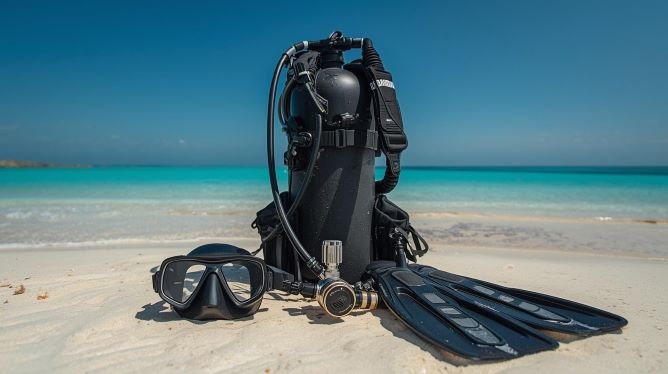
Before entering the water, take time to understand your gear. A good instructor will walk you through each piece, but it’s important that you personally check:
- Mask fit and seal
- Regulator breathing smoothly
- BCD inflating and deflating correctly
- Tank pressure and mounting
- Fins fitting securely
Even if a professional prepares your equipment, your own double-check is part of being a responsible diver.
Equalise Early and Often
Beginner divers often experience discomfort if they descend too quickly without equalising their ears. Equalise before you feel pressure and continue doing it throughout your descent. This protects your ears and helps you stay relaxed and in control.
Stay Close to Your Instructor
As a first-time scuba diving student, one of the most important rules is to stay within arm’s reach of your instructor or buddy. They will monitor your buoyancy, air, and comfort level. Never drift away, even if something catches your eye. Staying together ensures support is always right beside you.
Monitor Your Air Frequently
Air awareness is essential. Check your gauge every few minutes and notify your instructor when you reach predetermined markers, such as 100 bar or 70 bar. Consistent monitoring prevents rushed ascents and helps keep the dive safe and enjoyable.
Understand Bali’s Currents
Currents are a natural part of Bali diving. In beginner areas, they are mild, but conditions can change quickly. Always listen closely to your briefing and ask questions if something is unclear. If currents pick up, your instructor will adjust the dive plan. Good communication brings confidence.
Move Slowly and Stay Relaxed
First-time divers sometimes rush or use their hands too much. Slow, steady fin kicks and calm breathing are the foundations of good diving. Moving gracefully reduces air consumption and helps you enjoy the marine life without disturbing it.
Dive Within Your Limits
Never feel pressured to go deeper or stay longer than you feel comfortable. Whether it’s your first dive or your ninety-ninth, your limits matter. Bali has beautiful underwater scenery at every depth and with different conditions, so there is no need to push yourself if the conditions don’t suit you. Let your instructor know if you need more time or want to adjust the dive, or abort it totally.