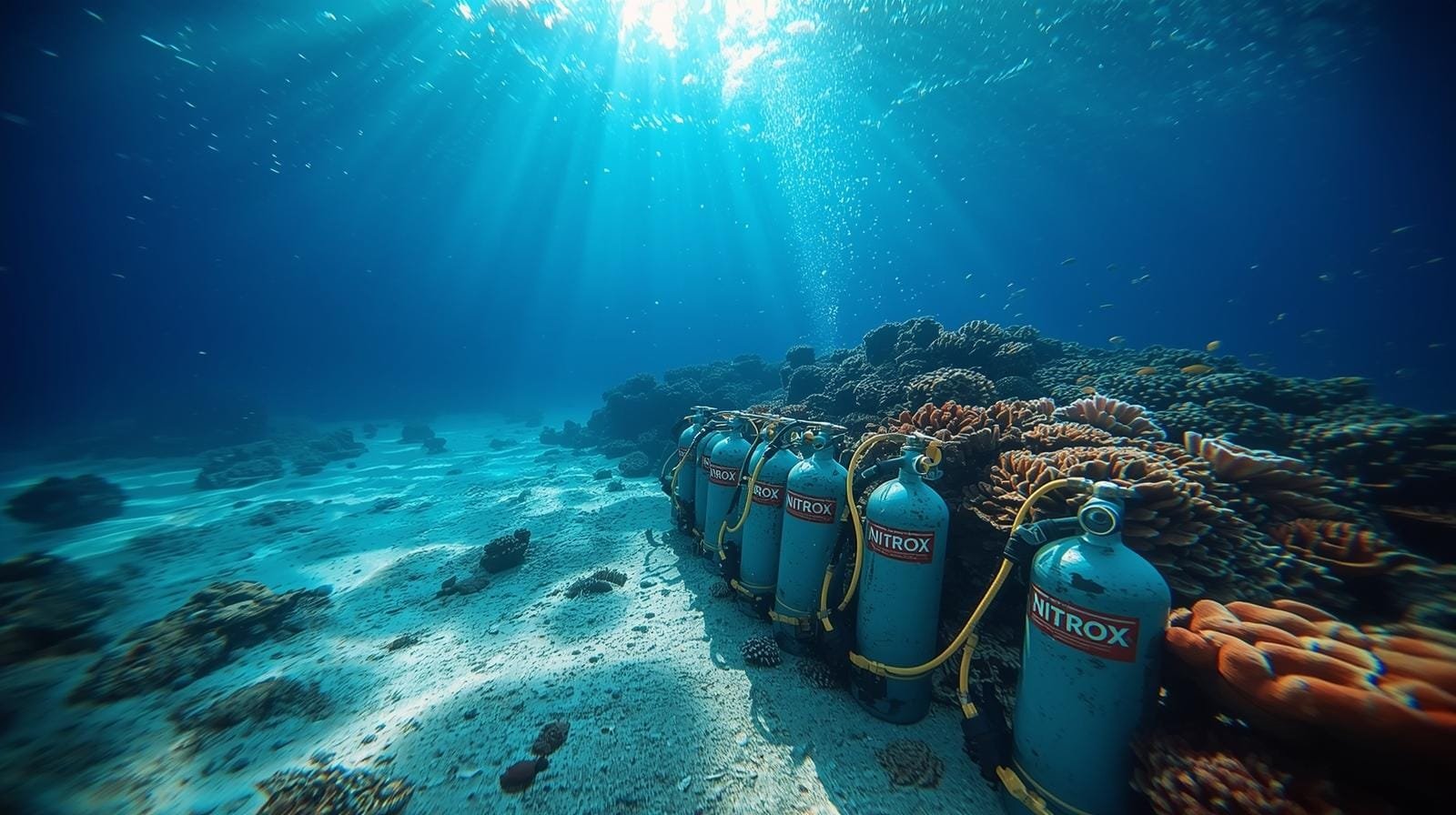
Scuba diving offers a unique opportunity to explore the wonders of the underwater world, but the choice of breathing gas can significantly impact the diving experience. Two common options for recreational divers are diving with Nitrox (Enriched Air Nitrox or EANx) and diving with normal air (compressed air). Let’s explore the differences between the two:
Nitrogen content: Normal air, typically used for recreational diving, contains approximately 21% oxygen and 79% nitrogen. Nitrox, on the other hand, contains a higher percentage of oxygen, usually between 30% and 40%, with the remainder being nitrogen.
Reduced Nitrogen Absorption: Diving with Nitrox minimizes the amount of nitrogen absorbed by the body compared to breathing air. This results in shorter surface intervals and reduced risk of decompression sickness, making nitrox a safer option for repetitive dives or dives with extended bottom times.
Extended bottom time: Because of the reduced nitrogen content, divers using Nitrox can stay at depth for longer periods of time without increasing the risk of nitrogen narcosis or decompression sickness. This allows for more exploration time during dives and enhances the diving experience.
Cost Consideration: While diving with nitrox offers several benefits, it typically comes at an additional cost compared to using air. Nitrox certification and special equipment to mix and analyze the gas can be an additional expense for divers.
Training Requirements: Diving with Nitrox requires specialized training to understand the differences in gas mixtures and their effects on the body. Divers must complete Nitrox certification courses to learn the proper use, handling and safety protocols associated with Nitrox diving.